Current Project: Bladder Cancer

The Louisiana Cancer Endowment (LCE) is launching a statewide initiative generously funded by Pfizer to improve bladder cancer care and outcomes across our state, with a particular focus on communities facing barriers to timely, high-quality cancer care. Building on the success of LCE’s prostate cancer efforts with Pfizer, the initiative will bring together oncologists, urologists, and other cancer physicians, along with researchers, healthcare systems, public health experts, and community partners to better understand and address racial, geographic, and socioeconomic disparities in bladder cancer detection, treatment, and access to care.
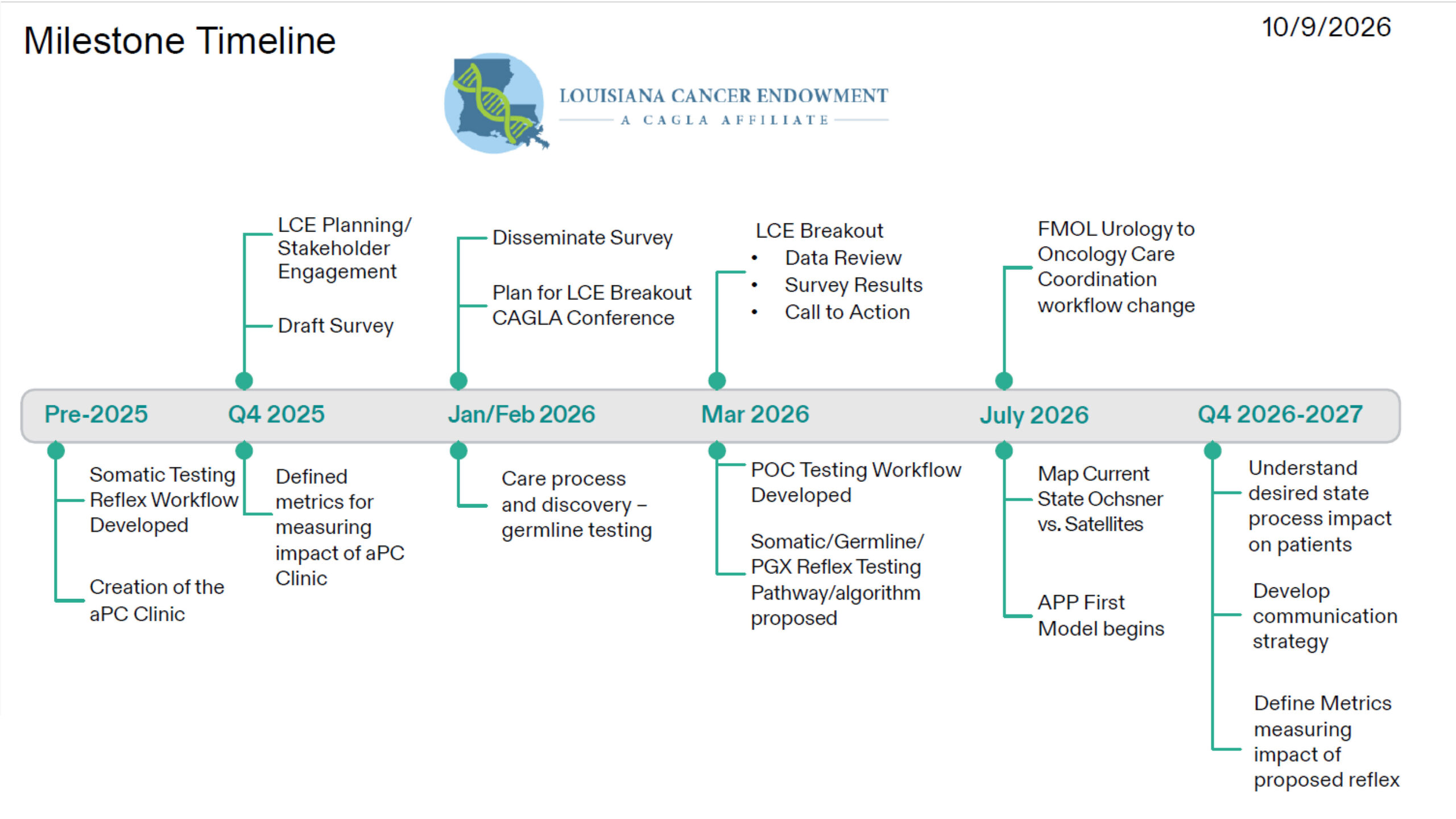
The initiative will begin with a statewide survey of healthcare professionals and an inaugural physician-led symposium in New Orleans in early 2027. These efforts will examine current approaches to bladder cancer care, identify barriers to guideline-based treatment, and highlight opportunities to improve coordination, access, and health equity. A follow-up virtual roundtable will help participants prioritize practical strategies and explore potential pilot programs, such as patient navigation, telehealth, rural education, and collaboration among health systems and providers.
Findings and progress will be discussed at the 2027 CAGLA NeauxCancer Conference in New Orleans, bringing together more than 1,500 clinicians, researchers, policymakers, and other cancer professionals. Through collaboration and shared learning, LCE and its partners aim to turn real-world insights into meaningful action—helping ensure that every Louisianan, regardless of where they live or their circumstances, has access to the best possible bladder cancer care.
Future Project: Cost-Benefit Analysis

The Louisiana Cancer Endowment (LCE) plans to undertake a comprehensive, objective analysis of the economic and public health impacts associated with environmental pollution and the chemical industry in Louisiana. The project will examine the industry’s contributions to the state’s economy—including employment, wages, business activity, and tax revenue—while also considering public investments and incentives that support industrial development.
Importantly, the analysis will look beyond traditional economic measures to better understand the broader costs associated with environmental pollution. This will include examining available evidence related to environmental impacts and healthcare costs (especially as it relates to cancer). The goal is to develop a clearer, evidence-based picture of the true economic impact of industry when factors such as long-term health outcomes and costs are considered.
By bringing these data together, LCE hopes to provide policymakers, communities, businesses, and other stakeholders with objective information that can support informed decision-making and responsible economic development. The project is intended to promote a better understanding of how Louisiana can balance economic opportunity alongside our environmental and long-term public health.
Past Project: Prostate Cancer

The Louisiana Cancer Endowment (LCE), in partnership with Pfizer and leading cancer care professionals across the state, completed a statewide initiative to better understand and address disparities in prostate cancer care across our state. The multi-phase project brought together oncologists, urologists, researchers, public health experts, and healthcare providers to examine differences in access to and use of guideline-adherent care across Louisiana, with particular attention to geographic and practice-level variation over the course of a year. .
The initiative identified meaningful differences in guideline-adherent prostate cancer care among geographic regions and across different practice and provider types. Notably, medical oncologists in Southeast Louisiana demonstrated adherence to national prostate cancer treatment guidelines that exceeded the national average. A cross-section of cancer physicians from across the state representing different prostate cancer specialties and various hospitals and health systems convened in New Orleans to discuss solutions. These findings and the discussions that followed provided valuable, real-world insight into where opportunities existed to strengthen care and improve consistency across the state.
Importantly, the project moved beyond identifying disparities to support meaningful changes in clinical practice. The findings helped inform interventions within major health systems across Louisiana, including changes in referral patterns and approaches to patient care. Through collaboration, data sharing, and physician engagement, the initiative demonstrated how a better understanding of statewide cancer care patterns can lead to practical improvements and help more Louisiana patients receive appropriate, evidence-based prostate cancer care.